One of my more interesting classes this semester is “Sustaining Design.” It’s only a 1 hour class and it’s a short course-5 weeks-but I’m learning a lot. We had a local architect come talk to us about some LEED (Leadership in Energy and Design) projects she’s worked on, watched a documentary about trash, and we took a tour of JCCC’s campus to see the sustainable projects being done.
When it comes to being sustainable I think a lot of sources use guilt to try to motivate people to do better. One thing I like about our class is that instead of focusing on guilt we talk about hope for the future. It’s made me think more about what I can do to make less of a negative impact on the earth.
I’m not nearly close to perfect in this aspect but I’m trying to get better. Some eco-friendly measures, like composting, take a fair amount of work. Other measures, like the 5 below, take almost no effort. Most of them will even save you money! I say that’s a win-win.
1. Unplug

We all know that appliances use energy but you may not be aware that they still use energy when they’re not running. That sneaky wasted energy is called “vampire energy” and it costs you more than you may realize. Unplug appliances like your coffee maker, toaster, hair dryer, and phone chargers when you’re not using them. Plugging them back in takes literally 1 second. It’s also a good idea to keep electronics like the TV on a power strip to make turning them on and off easier. Consider this perspective from
Earth911.org:
The cost of running the average television for two hours per day for a month is about $1.50. If you factor in the energy your TV uses when it’s off, it can cost you up to $18 on your energy bill, according to the Nebraska Public Power District.
So if we look at that example, only approximately 8% of the energy your TV uses is when it’s on; the other 92% of the energy it takes is when you’re not using it. It makes the “hassle” of unplugging and plugging in your stuff seem worth it, doesn’t it?
2. Recycle Plastic Bags and Plastic Wrap/Films

I know you know you should be taking reusable bags with you when you go shopping, but sometimes we forget them, or sometimes you make an unexpected stop and wind up with a few plastic bags. Almost every grocery store or mega-store (Wal-mart, Target) has a bin to take back your plastic bags.
What I didn’t know until recently was that they’ll also take plastic wrap and film. Here’s a quick guide of what plastic films you can and can’t recycle: (via
Earth911)
Please DO recycle:
- Grocery & retail bags
- Newspaper bags
- The outer Wrapping from Napkins, Paper Towels, Bathroom Tissue & Diapers
- Bread bags
- Dry cleaning bags
- The outer wrapping from bulk beverages
- Produce bags
- All clean, dry bags Labeled #2 or #4
Please DO NOT recycle:
- Food or cling wrap
- Prepackaged food bags (including frozen food bags and pre-washed salad bags)
- Plastic Film That has Been Painted or has Excessive Glue Residue
I just keep a large plastic, paper, or gift bag in my laundry room closet to collect my plastic bags and wrap. When it’s full I just take it with me to the grocery store or to Target. Easy!
3. Stop Buying Bottled Water

This is another easy one. Sure, having bottled water in the fridge is convenient, especially when you’re on the go a lot. But it’s super wasteful and kind of expensive. Most tap water is very safe to drink, but if you don’t like the taste of it you can buy a
Brita pitcher or
filter for the tap to make it taste just like the bottled stuff. We used a Brita pitcher for years and it worked great. It takes a couple minutes to fill it up when it’s empty but think about how much easier that is than carrying a heavy case of water around.
If you absolutely have to keep buying bottles make sure you recycle them. If you don’t have curbside recycling or a recycling center nearby some stores like Target have a plastic recycling bin right in the store. It’s a lot easier and a lot better for the environment though to just to skip the disposable bottles and use a
reusable water bottle when you’re on the go.
4. Shop at Farmers Markets
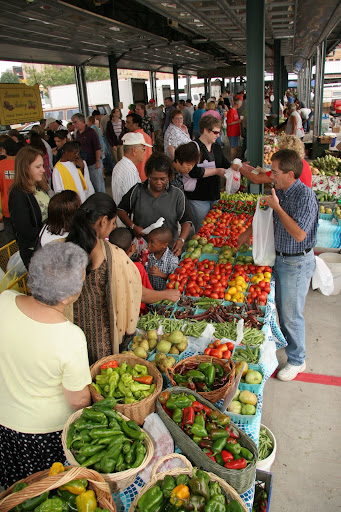
Tis the season for farmers markets. Buying your produce at local markets may take a little more planning, since they’re usually only open once or twice a week for a few hours at a time, but it’s worth it. Here are just a few of the benefits:
- Less transportation costs. Local produce means much less transportation costs and carbon emissions than produce from a grocery store. Those products have to be transported from the farm (often out of state or out of country) to the distributor, then to the grocery store, and then to your home.
- Less waste. Produce at farmers markets usually isn’t packaged, which means you can skip all that waste and put it directly into your reusable shopping bag.
- You’ll be supporting local farmers and the local economy
- Lots of organic options. For a lot of small farmers "organic” isn’t something fancy they do, it’s just how they grow their food. Plus it’s generally a lot cheaper than what you’ll pay for organic produce at the grocery store
Aside from that, the food is almost always fresher and tastes better. And I think it’s a heck of a lot more fun to shop at a cute outdoor market than in a crowded grocery store. If you don’t know where or when your local farmers markets are just type in your zip code
here.
5. Use Natural Cleaning Products

There are a lot of cleaning products out there that claim to be “green,” but guess what: most of them aren’t. Pinterest has a ton of links for homemade cleaning solutions. We recently started using a DIY kitchen and bath cleaner that’s just equal parts vinegar and dish soap. Super easy and it works really well! The vinegar smell can be a little strong but it’s much better than breathing in nasty chemicals from store bought sprays. Plus this is super cheap. Just reuse an empty spray bottle and make your own solution for pennies. Bonus: you never have to worry about running to the store when you run out! (you know, as long as you have the supplies around…)
Search Pinterest or click
here to find a great roundup of homemade cleaners.
I'd like to know...which of these are you already doing? Is there anything on here that you were surprised to learn? For me the biggest thing was plastic film recycling. I had been recycling the store bags, but I had been throwing away the bread bags and the plastic wrap on things like paper towels. Not anymore!


